AWS Bedrock vs LangChain: Framework Comparison 2026
AWS Bedrock vs LangChain compared on deployment, pricing, and control. Choose the right framework for your AI agent architecture.
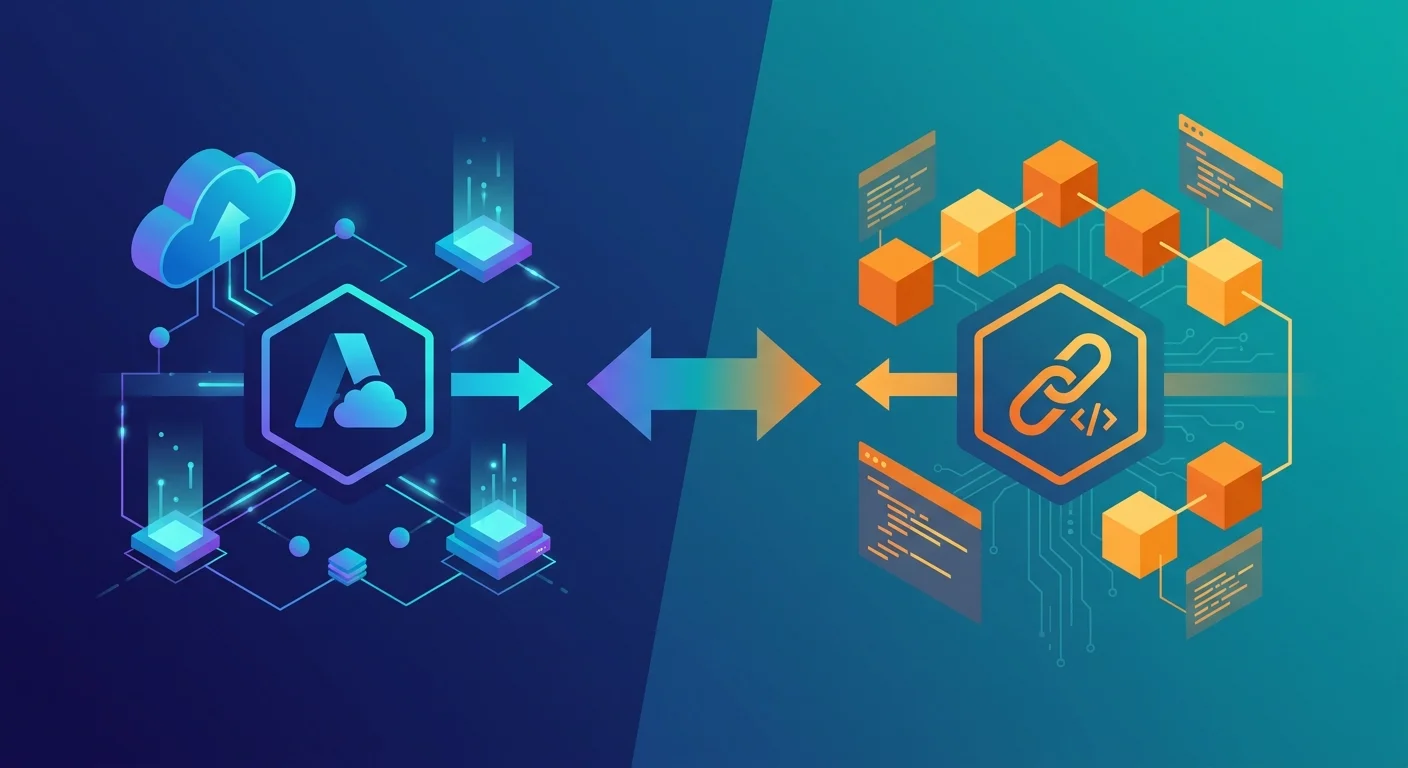
TL;DR: AWS Bedrock offers managed infrastructure with integrated AWS services, while LangChain provides flexible application-level orchestration you own and deploy. Choose Bedrock when AWS integration and managed operations outweigh framework flexibility; choose LangChain when you need custom orchestration logic or deployment portability across cloud providers.
Key Takeaways
- AWS Bedrock provides managed agent infrastructure with AWS service integration; LangChain is an application framework you deploy and operate
- Bedrock Agents use pre-built orchestration loops; LangChain/LangGraph let you define custom control flow and state management
- Cost structures differ fundamentally: Bedrock bills per API call and managed service usage; LangChain costs depend on your chosen hosting, model providers, and operational overhead
- Bedrock's Knowledge Bases and Guardrails are managed AWS services; LangChain integrations require you to configure and maintain external services
- Neither framework eliminates the need for proper authorization, evaluation, monitoring, and testing of agent behavior
- Use Bedrock when AWS-native integration and reduced operational burden matter most; use LangChain when framework control and multi-cloud portability are priorities
What are AWS Bedrock and LangChain?
AWS Bedrock is Amazon's managed service for building generative AI applications. It provides access to foundation models from providers like Anthropic, Meta, AI21 Labs, Cohere, and Amazon, along with managed capabilities for agents, knowledge bases, guardrails, and model evaluation. Bedrock Agents specifically handle orchestration, tool execution, and knowledge retrieval through AWS-managed infrastructure.
LangChain is an open-source framework for developing applications with large language models. It provides abstractions for model integrations, prompt management, tool calling, memory, and retrieval. LangChain applications define their own orchestration logic and deploy to infrastructure the developer selects. LangGraph, built by the same team, adds explicit graph-based orchestration with state management, human-in-the-loop patterns, and checkpoint persistence.
The comparison is not symmetric: Bedrock is a managed cloud service with opinionated patterns, while LangChain is a framework that requires you to make deployment and integration decisions.
How do AWS Bedrock and LangChain compare architecturally?
Neither approach removes responsibility for testing, authorization, or observability. AWS manages Bedrock's infrastructure; you still own the agent's behavior and data access policies.
When should you choose AWS Bedrock?
AWS Bedrock is a strong choice when the following conditions apply:
You want reduced operational overhead
Bedrock handles infrastructure provisioning, scaling, model endpoint management, and service availability. You configure agents through the AWS console or APIs rather than deploying container images, managing Kubernetes clusters, or scaling worker pools. For teams without dedicated ML infrastructure engineers, this can significantly reduce time to production.
AWS service integration is central to your architecture
Bedrock Agents integrate natively with Lambda for tool execution, S3 for data storage, Secrets Manager for credentials, CloudWatch for logging, and IAM for permissions. Bedrock Knowledge Bases automatically provision vector databases, handle document chunking, and manage embeddings. If your application already runs on AWS and uses these services, Bedrock reduces integration complexity.
You need managed knowledge retrieval
Bedrock Knowledge Bases abstract vector database operations. You upload documents to S3, specify a chunking strategy, and Bedrock handles embedding generation, indexing, and retrieval. The managed service includes maintenance, backups, and scaling. Contrast this with a LangChain application where you provision Pinecone, Weaviate, or pgvector yourself, implement chunking logic, handle embedding API calls, and manage index updates.
Regulatory compliance requires AWS-managed services
Some organizations mandate AWS-native services for compliance, audit trails, or data residency requirements. Bedrock provides AWS service guarantees, encryption at rest and in transit, VPC isolation, and CloudTrail audit logging. A self-deployed LangChain application requires you to implement and verify equivalent controls.
You accept Bedrock's orchestration patterns
Bedrock Agents follow a fixed orchestration loop: receive input, plan actions, invoke tools, retrieve knowledge, generate response. This loop handles many common agent patterns but does not expose the full control surface of a custom state machine. If your workflow fits Bedrock's agent model, you avoid writing orchestration code. If it requires custom loops, branching logic, or multi-agent coordination, you may need to work around Bedrock's constraints or bring orchestration logic into Lambda functions.
When should you choose LangChain?
LangChain is the better choice when these priorities dominate:
You need custom orchestration and control flow
LangGraph lets you define explicit state machines with conditional edges, parallel branches, human approval steps, and error recovery paths. You control when the model is invoked, how tools are selected, what context is retained, and when the agent terminates. Bedrock Agents provide a managed loop; LangChain gives you the loop's source code.
For example, a compliance-review workflow might require: (1) an LLM extracts claims, (2) a human reviews flagged claims, (3) approved claims proceed to a second LLM for final formatting, (4) rejected claims return to step 1 with feedback. This branching, interruption, and resumption pattern is natural in LangGraph and requires workarounds in Bedrock Agents.
Multi-cloud or hybrid deployment is required
LangChain applications are infrastructure-agnostic. Deploy the same codebase to AWS ECS, Google Cloud Run, Azure Container Instances, Kubernetes, or a Lambda function layer. Switch model providers by changing configuration rather than rewriting integrations. This portability matters for organizations with multi-cloud strategies, edge deployment requirements, or vendor diversification policies.
You want to control model provider selection
LangChain supports OpenAI, Anthropic Claude (via Anthropic API or Bedrock), Azure OpenAI, Google Vertex AI, Cohere, Hugging Face models, local models via Ollama or vLLM, and many others through a unified interface. Change providers by swapping a configuration object. Bedrock limits you to its model catalog unless you integrate SageMaker endpoints or ECS-hosted models, which adds deployment complexity.
Framework flexibility and community ecosystem matter
LangChain has a large open-source community, extensive documentation, and third-party integrations for observability (LangSmith, Langfuse), vector databases, data loaders, and specialized tools. You can inspect the framework's source code, contribute fixes, and adopt community patterns. Bedrock is a closed AWS service with documentation and support through AWS channels.
You need granular cost control
LangChain separates model costs from hosting costs. Use cheaper models for simple tasks, expensive models for complex reasoning, and local models for high-volume low-risk requests. Host on spot instances, scale to zero between requests, or run on-premises for sensitive workloads. Bedrock's pricing is per API request with managed service overhead; you cannot separately optimize model selection, hosting tier, or caching strategy beyond what AWS exposes.
How do deployment models differ?
AWS Bedrock deployment
- Enable Bedrock in your AWS account and request model access
- Create a Bedrock Agent through the console or CloudFormation
- Configure the agent's foundation model, instructions, and action groups
- Link Lambda functions for tool execution
- Optionally create Knowledge Bases by uploading documents to S3
- Invoke the agent via the `bedrock-agent-runtime` API from your application
Your application calls Bedrock APIs; AWS manages the agent's runtime, scaling, and state. Updates require API calls or CloudFormation changes rather than code deployments.
LangChain deployment
- Write agent logic in Python or TypeScript using LangChain/LangGraph
- Configure model providers, vector stores, and tool integrations in your code
- Package the application as a Docker container, Lambda layer, or direct Python deployment
- Deploy to your chosen infrastructure (ECS, Cloud Run, Lambda, EC2, Kubernetes)
- Provision supporting services: vector database, checkpoint storage, observability
- Expose an API endpoint or queue consumer for application integration
You own the deployment pipeline, container images, infrastructure scaling, and dependency management. Updates require code changes, testing, and redeployment through your CI/CD pipeline.
What about cost comparison?
Cost structures are not directly comparable. Bedrock charges per API request plus managed service fees; LangChain costs depend entirely on your deployment choices.
AWS Bedrock pricing example (as of October 2026)
- Model API calls: $0.00300 per 1K input tokens, $0.015 per 1K output tokens (Claude 5 Sonnet via Bedrock)
- Bedrock Agents: $0.02 per agent request (includes orchestration, not model tokens)
- Knowledge Bases: $0.10 per 1K documents ingested, $0.035 per 1K vector storage per month, $0.035 per 1K retrievals
- Guardrails: $0.75 per 1K content units processed
A 10K-request/month agent workload with knowledge retrieval might cost: 10K × $0.02 (agent requests) + model token costs + knowledge base retrieval costs. The managed service premium is explicit in the per-request fee.
LangChain pricing factors
- Model API costs: Same token pricing if using Claude via Anthropic API; choose cheaper models like GPT-4o-mini ($0.150/$0.600 per 1M tokens) or local models ($0) to reduce this
- Hosting: AWS ECS Fargate ~$50/month for 0.5 vCPU, 1GB RAM; scale based on load
- Vector database: Pinecone Starter ~$70/month; pgvector on RDS ~$50/month; self-hosted Qdrant $0 + compute
- Observability: LangSmith Developer ~$0/month for moderate usage; Langfuse self-hosted $0 + hosting; CloudWatch Logs ~$0.50/GB
- Engineering time: Design, deployment, maintenance, on-call
For low-volume prototypes, Bedrock's managed service may cost less than operating your own infrastructure. For high-volume production workloads, LangChain's hosting and model flexibility can yield significant savings. The break-even point depends on request volume, model selection, and your team's operational efficiency.
How do knowledge retrieval approaches compare?
Bedrock Knowledge Bases
Bedrock Knowledge Bases provide managed vector storage and retrieval:
- Upload documents to an S3 bucket
- Configure chunking strategy (fixed-size or semantic)
- Bedrock generates embeddings using Amazon Titan Embeddings or your selected model
- Queries retrieve relevant chunks and inject them into agent context
- Updates require re-ingesting documents; Bedrock handles synchronization
The managed service hides vector database operations but limits control over chunking heuristics, embedding model selection, and retrieval ranking algorithms. You cannot implement custom re-ranking, hybrid search (vector + keyword), or dynamic chunking based on document type.
LangChain retrieval
LangChain applications configure retrieval explicitly:
This exposes the full retrieval pipeline: customize chunking per document type, choose embedding models based on domain and cost, implement hybrid search with multiple retrievers, add re-ranking with Cohere or cross-encoders, and A/B test retrieval strategies. The cost is implementation complexity and operational responsibility.
What authorization model should you use?
Both Bedrock and LangChain require explicit authorization logic. AWS IAM controls access to Bedrock APIs; your application must verify user permissions before invoking agents. LangChain applications implement authorization in code or through API gateway policies.
Critical distinction: the agent's instructions are not a security boundary. Do not rely on prompt engineering to prevent unauthorized actions. Implement authorization checks before tool execution:
Bedrock authorization pattern
Use IAM policies to restrict which Lambda functions an agent can invoke. Within each Lambda function, verify the caller's permissions against the requested action. Pass user identity through the agent invocation and validate it in the tool execution context.
LangChain authorization pattern
Wrap tool functions with authorization decorators or middleware. Check permissions before executing database queries, API calls, or file operations. Maintain an audit log of tool invocations with user context.
Both approaches require you to define and enforce authorization policies. Neither framework makes this automatic.
How do you handle errors and retries?
Bedrock Agents error handling
Bedrock Agents retry failed tool invocations according to AWS retry policies. Lambda errors return to the agent for potential replanning. You control retry logic within Lambda functions and configure Lambda-level retry settings. The agent loop itself is managed by AWS.
If a tool fails repeatedly, the agent may return an error to your application. Configure appropriate timeout values and implement application-level fallbacks.
LangChain error handling
LangChain applications implement error handling explicitly:
You control retry logic, exponential backoff, circuit breakers, and error propagation. This flexibility allows sophisticated error handling but requires you to implement it correctly.
Which evaluation and testing strategies apply?
Both frameworks require rigorous testing. Do not assume managed infrastructure means less testing.
Bedrock evaluation
- Use Bedrock Model Evaluation to compare models on your task dataset
- Test agent workflows with representative inputs and verify tool invocations
- Monitor CloudWatch logs for agent execution traces
- Validate Knowledge Base retrieval quality with known queries
- Configure Bedrock Guardrails and test content filtering behavior
LangChain evaluation
- Use LangSmith or Langfuse for trace debugging and dataset evaluation
- Implement unit tests for agent state transitions and tool execution
- Capture and replay agent traces for regression testing
- Validate retrieval quality with metrics like MRR, NDCG, or precision@k
- A/B test prompt variations, retrieval strategies, and model selections
In both cases, test with adversarial inputs, edge cases, and realistic production data. Measure latency, token usage, and task completion rates.
How should you think about vendor lock-in?
Bedrock lock-in
Using Bedrock Agents couples your application to AWS infrastructure. Migrating to another provider requires rewriting agent orchestration, knowledge retrieval, and tool integration. Bedrock-specific APIs do not translate directly to other clouds.
Mitigation: encapsulate Bedrock API calls behind an internal interface. If you later switch providers, reimplement the interface rather than changing application logic throughout your codebase.
LangChain portability
LangChain applications can switch model providers, hosting platforms, and vector databases with configuration changes. The framework abstracts provider-specific APIs behind unified interfaces.
Caution: deep integration with LangChain's abstractions creates a different form of lock-in. Migrating from LangChain to a different framework or raw API calls requires rewriting orchestration logic.
What does a migration path look like?
From LangChain to Bedrock
- Identify orchestration patterns in your LangGraph state machine
- Map state transitions to Bedrock Agent action groups or step-through Lambda orchestration
- Migrate vector stores to Bedrock Knowledge Bases or keep existing vector DB and call from Lambda
- Replace LangChain tool wrappers with Lambda functions
- Rewrite authorization checks for IAM and Lambda context
- Update observability to use CloudWatch and X-Ray instead of LangSmith
This is a rewrite, not a lift-and-shift.
From Bedrock to LangChain
- Capture Bedrock Agent orchestration behavior in LangGraph state machine
- Migrate Knowledge Base retrieval to a LangChain vector store integration
- Port Lambda tool functions to Python/TypeScript functions or keep Lambda and call via API
- Deploy LangChain application to your chosen infrastructure
- Migrate observability and logging to LangSmith, Langfuse, or CloudWatch
- Test extensively; orchestration semantics may differ subtly
Again, this is a rewrite. Design for either framework from the start rather than assuming easy migration.
What production checklist should you use?
Before deploying either framework to production:
Neither framework is "production-ready" without these operational layers.
How do the frameworks compare for common agent patterns?
Conversational agents
Bedrock: Session state persists across invocations in Bedrock Agents. Configure session timeout and memory retention policies through the API.
LangChain: Use LangGraph checkpointers to persist conversation history to databases or filesystems. Implement session management and cleanup logic in your application.
Tool-calling agents
Bedrock: Define action groups as Lambda functions. Bedrock Agents call them based on orchestration loop decisions.
LangChain: Implement tools as Python or TypeScript functions. LangGraph decides which tools to invoke based on model output and state machine edges.
Multi-agent systems
Bedrock: Coordinate multiple agents by chaining Bedrock Agent invocations from Lambda or application code. No native multi-agent primitives.
LangChain: Implement supervisor patterns, handoffs, or parallel agent execution in LangGraph. The framework supports explicit multi-agent orchestration.
Human-in-the-loop workflows
Bedrock: Return tool results to application for human review, then resume agent invocation.
LangChain: Use LangGraph interrupts to pause execution, wait for human input, and resume from checkpoints without losing state.
Which framework should you choose?
Choose AWS Bedrock when:
- Your application is AWS-native and depends on AWS services
- You want to minimize infrastructure and operational overhead
- Managed knowledge retrieval and guardrails are high priorities
- Your agent workflows fit Bedrock's orchestration patterns
- Your team lacks ML infrastructure or DevOps expertise
Choose LangChain when:
- You need custom orchestration logic or complex control flow
- Multi-cloud, hybrid, or on-premises deployment is required
- Framework flexibility and community ecosystem are priorities
- You want granular control over model selection, hosting, and cost optimization
- Your team can operate and maintain agent infrastructure
Neither choice is universally better. The best framework is the one whose trade-offs align with your requirements, constraints, and team capabilities.
For broader framework comparisons, see our Complete AI Agent Frameworks Guide. For AWS-specific architecture decisions, review Amazon Bedrock AgentCore. For LangChain deployment patterns, see AgentCore vs LangChain.
Frequently Asked Questions
Can I use LangChain with AWS Bedrock models?
Yes. LangChain has a BedrockChat integration that calls Bedrock's model APIs. You can use Bedrock's model catalog with LangChain's orchestration framework. This gives you Bedrock's model access without its managed agent infrastructure.
Do I need to rewrite my entire application to migrate between frameworks?
Yes. Bedrock Agents and LangChain have different abstractions, APIs, and orchestration patterns. Plan for a rewrite rather than a migration. Design with portability in mind from the start if you anticipate switching.
Which framework has lower latency?
Latency depends on model selection, retrieval strategy, tool complexity, and network topology. Bedrock Agents add orchestration overhead; LangChain applications add hosting and cold-start overhead. Measure both on your specific workload rather than relying on generic benchmarks.
Can I use both frameworks together?
Technically yes, but this adds complexity. You might call LangChain applications from Bedrock Lambda tools, or invoke Bedrock Knowledge Bases from a LangChain retrieval chain. Evaluate whether the integration cost justifies the benefit.
How do I handle secrets and credentials?
Bedrock: Use AWS Secrets Manager and IAM roles for Lambda functions. Bedrock Agents inherit Lambda execution role permissions.
LangChain: Store secrets in environment variables, AWS Secrets Manager, HashiCorp Vault, or your chosen secrets management system. Load them in your application initialization code.
What if my requirements change after choosing a framework?
Budget time for a partial or complete rewrite. Small changes may fit within the chosen framework; large architectural shifts may require migrating. The cost of switching is the main reason to validate requirements thoroughly before committing to either framework.
Sources
- Amazon Bedrock - Build and scale generative AI applications with foundation models
- Amazon Bedrock Foundation Models Documentation
- Amazon Bedrock Knowledge Bases User Guide
- Amazon Bedrock Guardrails Documentation
- Amazon Bedrock Pricing
- LangGraph Overview - Low-level orchestration framework
- LangChain Overview - Agent harness documentation
- Amazon Bedrock Agents Classic Documentation
Subscribe to the newsletter
About the Author
Aaron is an engineering leader, software architect, and founder with 18 years building distributed systems and cloud infrastructure. Now focused on LLM-powered platforms, agent orchestration, and production AI. He shares hands-on technical guides and framework comparisons at fp8.co.
Cite this Article
Related Articles
AgentCore vs LangChain: 2026 Framework Guide
Compare AgentCore and LangChain for AI agents. Architecture, pricing, and deployment trade-offs explained with code.
AI EngineeringAWS AgentCore Explained: 5 Tools for Production AI Agents
Complete Python walkthrough of AgentCore Memory, Runtime, Code Interpreter, Browser, and Gateway. Build enterprise AI agents on AWS without managing infra.
AI AgentsAgent Orchestration Frameworks 2026: 6 Best Compared
Agent orchestration frameworks 2026 compared: LangChain, AgentCore, LangGraph, CrewAI, AutoGen and Strands on coordination, memory, cost and deployment.
AI Agent Development